
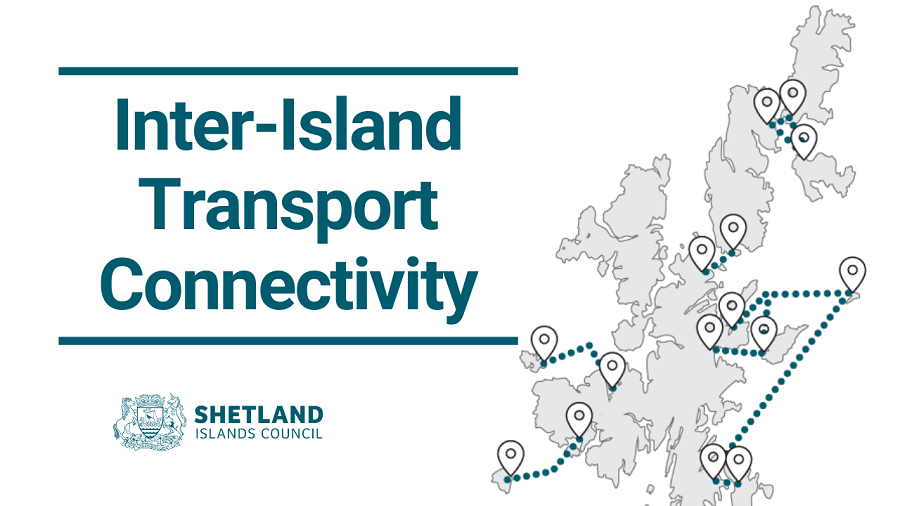
Shetland Islands councillors will next month consider the Inter-Island Transport Connectivity Programme’s Outline Business Case and choose a preferred option for each route.
This follows council-commissioned reports which established costings for both ferry and tunnel options.
Shetland’s current inter-island ferry network faces accepted operational problems, including significantly increased operating costs (rising to £25 million for 2024/25), an ageing fleet with an average vessel age of 32.5 years, difficulties in crew attraction and retention, and vehicle deck capacity issues on several key routes.
To address these challenges, Shetland Islands Council commissioned the IITCP in 2024. The programme is developing a network strategy for eight island communities, exploring a range of options from ‘business as usual’, ferry do something and do max options, and the potential for subsea tunnels for four islands.
At community drop-in sessions throughout the islands this week, residents heard the latest update on the programme and had the opportunity to share their views on the options presented.
In June last year, the Council also agreed to commission a Fixed Link Model (FLM) study from consultants Stantec and COWI - an international engineering consultancy with experience in tunnelling across the world, including in comparable locations in Scandinavia - using Yell Sound as a ‘test tunnel’.
That study involved input from three globally experienced contractors, consulted the financial community, and concluded that the tunnel is buildable and investable.
Council Leader Emma Macdonald says: “When islands have fixed links like causeways, bridges and tunnels, they experience repopulation, economic growth and a reduction in average age.
“Doing nothing is not an option in Shetland. We have islands depending on old, unreliable, carbon-heavy ferries, which are depopulating and continually at risk of ferry breakdowns.
“I look forward to the debate in the Chamber later in June, where we’ll consider all the options before us.”
Andy Sloan, Executive Vice President UK and International at COWI, which undertook the Fixed Link Model study as part of the Stantec-led IITCP, says: “We know that the tunnels can be built. From an engineering perspective it is relatively straightforward. The real challenge is whether we as a nation take a short-term or long-term view.
“As our global experience tells us, people will be attracted to live in remote and rural places if they are easy to get to, easy to get around, digitally connected and with job opportunities and an affordable standard of living.
“Fixed links can change how people in Scotland live, work and travel. They can reverse depopulation, provide vital services and support economic growth.
“Once Scotland builds its first tunnel, it will never stop.”
The cost summaries can be viewed on our website