
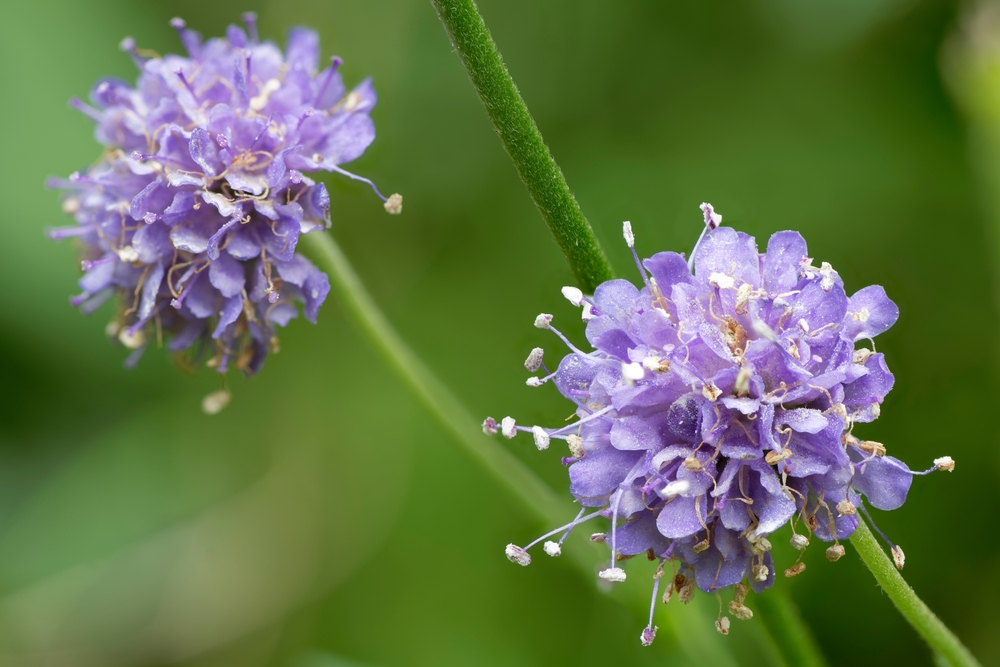
In 2025, Climate Change Strategy officers designed a series of small projects alongside partners from RSPB Shetland, Species on the Edge and the Shetland Amenity Trust. In January 2026, officers were successful in securing project funding from the Nature Restoration Fund to bring these projects forward. In March 2026, the preparation works for all projects were completed and locally gathered wildflower seeds were sown. The first flowers are expected to bloom in summer 2026.
The areas are being monitored by officers from the Shetland Amenity Trust, Species on the Edge and SIC’s Climate Change Strategy team. The monitoring efforts for all sites include bee counts, Bee Walks, and flower insect timed (FIT) Counts. You can learn more about the Bumblebee Conservation Trust’s Bee Walks here and further information about the UK Pollinator Monitoring Scheme’s FIT counts here.
Project Partners
Species on the Edge is a Scotland-wide partnership programme of NatureScot and seven conservation organisations, including RSPB, working to save 37 of Scotland’s rarest and most vulnerable coastal and island species. In Shetland (Species on the Edge Shetland), the efforts are focused on eight of these species – Curlew/Whaap; Moss carder bumblebee (agricolae/Shetland Bumblebee); Plantain leaf beetle; Endemic hawkweed species; Mouse-eared hawkweed; Red-necked phalarope/Peerie Deuk; Lapwing/Peewit; Oysterplant; and, Twite/Lintie. Through engagement events, practical conservation work and working with landowners/managers, we are raising awareness and increasing the protection of these species.
As part of their efforts to support these native species, Species on the Edge and RSPB teamed up with Shetland Amenity Trust to collect native wildflower seeds from across Shetland. It is this seed that is being used to grow wildflowers at our project sites in the hopes this will support native species and increase biodiversity in the local areas.
You can learn more about the work of Species on the Edge Shetland here.


The Nature Restoration Fund
The SIC’s local government allocation of the Nature Restoration Fund (NRF) is linked to the Edinburgh Process, a Scottish Government effort to recognise the role of local government in addressing climate change and biodiversity loss, to which the SIC is a signatory.
The projects funded by the NRF form a key delivery mechanism of the Scottish Governments Biodiversity Strategy to 2045. This Strategy sets out the Scottish Government’s ambition to halt the loss of nature by 2030 and make progress in restoring nature by 2045.
The projects being undertaken by the SIC and partners will provide habitat and resources for native species, support the growing and preservation of native plant species and help connect natural spaces. While efforts are limited to these projects, learnings from these can go on to inform future project creation and local decision-making.
To learn more about the NRF, visit the Scottish Government webpage here.


Project 1: Grounds Maintenance Pilot Project
Several circular grass sites in Rudda Court in Sound were chosen as test areas. This is because they are almost identical in physical characteristics such as size and content, meaning These sites underwent the most rigorous preparation works where turf was removed from some sites and others had all their surface turf rotavated (turned and tilled). The turf removed was used to form a Bee Bank, a home for Shetland’s bees, between Rudda Court and the Gospel Hall. Seeds were sown in early March 2026 and the first flowers are expected to bloom in the summer.
An area of Breiwick Road at the Knab in Lerwick was chosen as another test area due to its location and position. This site was relatively undisturbed, having only the top surface raked and broken up. This site had some seed sown but also had ‘plug’ plants planted that were grown elsewhere from these collected seed.
The different methods trialled at the sites give the project team many important insights such as which are the best at increasing biodiversity as well as what their ongoing maintenance cost and needs are.
This is a one-year project with the possibility of extension thereafter if funding and other conditions allow.
Project 2: Schools Biodiversity Projects
In the school year of 2024 and 2025, the Climate Change Strategy team debuted the Schools Climate Roadshow. The feedback received highlighted tree planting, food growing and planting for nature as the activities most commonly listed by pupils as ways to tackle climate change and support the environment. In response the Climate Change Strategy officers began to design and plan pilot projects alongside two schools, Tingwall Primary and Aith Junior High both of which took part in the Schools Climate Roadshows. The project sites at these schools provide different learning opportunities for the school and project team due to their different characteristics, such as distance from the sea and footfall and so on.
This is a two-year project with the possibility of extension thereafter if funding and other conditions allow.