
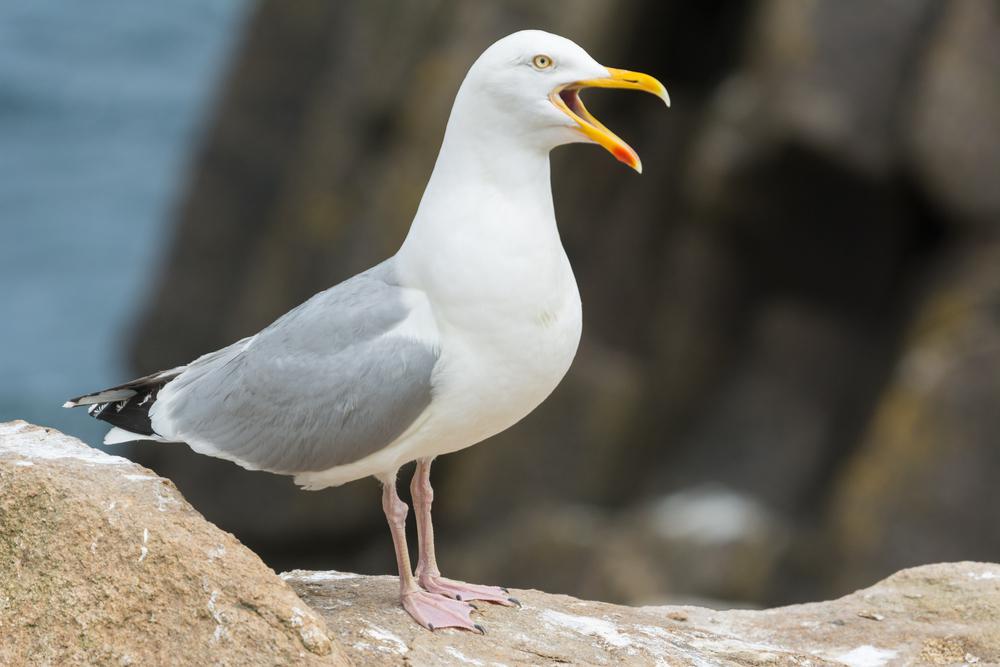
Shetland Islands Council is advising property owners and council tenants to get in touch if they have any problems with gulls’ nests.
By April, the birds will have begun mating and building nests. Gulls nesting on buildings can be territorial, and aggressive to anyone coming near their nesting site, particularly once chicks have hatched. They can also be very noisy and their droppings can present a public health risk.
All wild birds, including gulls, are protected by law, so it is important to take whatever proactive steps are possible to discourage them from nesting in the first place.
The Council’s Environmental Health Team can provide further advice on this. More information can also be found on Nature Scotland’s website
Provided the relevant licence is in place, the Environmental Health service can remove nests. There is a charge of £99.50 for this service, which includes an initial treatment and up to two follow-up visits. For Council house tenants, the Council can also provide gull-proofing if requested. Private house owners are encouraged to proof their own homes or get a professional to do this for them.
David Robertson, Team Leader – Environmental Health: “We would ask everyone to keep an eye on their property in the coming weeks. Gulls nesting on rooftops can be a real nuisance and we’d prefer residents to take the recommended steps to deter gulls and keep their properties free of nesting material early on in the season. This can avoid the need for further and more intrusive interventions later on should the birds become more established.
“If left too late and chicks have hatched you will have to learn to live with your new and noisy neighbours for the whole summer.”
Anyone who’d like to discuss any problem gulls’ nests can get in touch with Environmental Health on 01595 745250
Notes for editors
There are a number of ways to address the problem of nesting gulls:
- Remove things that attract gulls such as food waste and litter. Make sure bins are secure and emptied regularly.
- Clear old nesting material from areas where gulls have previously nested and caused problems in the past. This will also reduce the attractiveness of the site for birds in future.
- Prevent birds from nesting, including the use of netting or wiring. Fit anti-nesting spikes to proof key areas such as chimney pots or guttering/roof valleys etc.
- Use of scaring devices to help discourage birds from using a site. Audio devices are sometimes not appropriate in residential areas but visual deterrents are sometimes effective.
- Destruction or removal of nests requires a licence from Nature Scotland and is only effective at the beginning of the season. This should be done as regularly as possible to avoid the need for the removal of eggs. Licence applications must be made by the owner, occupier or tenant of the property affected although, subject to your agreement, this can be done by the Council’s Environmental Health service on your behalf.
- Removal of eggs - regular removal of nests as they are built should reduce the need to remove and destroy eggs. However, this may still be necessary in some cases and again will require a Nature Scotland licence. Once eggs are removed (along with the nests) birds will probably attempt to re-lay and can do this multiple times. As with the removal of nests, this should be done as early as possible, and frequently, to ensure any missed or additional eggs do not hatch. Once eggs hatch it is too late; no further intervention can be made.
Nature Scotland has recently launched a new online gull licence application process for gull public health or safety licences. Details on how to apply can be found on their website