The Shetland Recovery Hub and Community Network is again hosting a succession of events to help raise awareness and tackle stigma relating to alcohol and other drug dependency.
We’ve been speaking to service manager Amanda Pearson about how the service is approaching the challenge of humanising and tackling a problem that can affect anyone in society.
There are around three drugs-related deaths in Scotland every day, while recently published figures show that there were four fatalities in Shetland alone attributed to drugs in 2024.
These stark figures highlight the urgent need for effective interventions and support systems, says Amanda.
“If you remember in the news a while back there was an issue with the Black Gaet, and something had to be done about it because this stretch of road was dangerous,” she says.
“Nobody died on that stretch of road. If four people had died, can you imagine the public outcry? We have lost four people that could have been contributing to our community, to our economy. Four people that are somebody’s loved one, somebody’s daughter, son, wife, brother…”
Statistics say that, for every individual with substance issues, on average 11 other folk will be directly affected and “all of those people feel that stigma: the shame and guilt will keep people where they’re at”.
Stigma can significantly hinder individuals from seeking the help that is available, and addressing that is “essential for creating an environment where people feel safe and supported in their recovery journey”, Amanda continues.
The recovery hub is hosting a wide range of events throughout September as part of efforts to reduce that stigma.
Sunday (31 August) saw the staging of a poignant remembrance event at Lerwick Flower Park, where candles were lit to remember those who have lost their lives or been harmed by an overdose, as part of International Overdose Awareness Day.
Further events tying in with National Recovery Month will take place in the second half of September, along with a plethora of weekday sessions and events throughout the month.
That will be followed by the annual walk to celebrate recovery – tying in with a national event being held in Stirling – on Saturday 27 September. The walk begins at the recovery hub in Lerwick’s Pitt Lane, with the Bigton Samba Band coming along to “make a noise with us to stamp out stigma”.
A host of activities including a weekly sports club and a Sports Day in memory of Robert Hannah at Gilbertson Park on Monday 22 September will take place, along with a screen-printing workshop at Gaada, t-shirt and flag-making, meditation and social evenings.
A recovery café hosted by the lived and living experience recovery network will be in Mossbank for the first time, alongside sessions in Scalloway and Brae.
There will be a barbecue in Park Lane’s community garden on Saturday 20 September which, along with the recovery walk and a quiz night at the Methodist Church on Friday 26 September, will be open to the public.
Food, music, games, face-painting, temporary tattoos and Miss Sprinkles’ ice cream van will be on offer at the barbecue, which Amanda says is important in fostering a supportive environment and bringing people together.
“It provides a space where individuals with lived and living experiences can share their stories and support one another,” she explains. “Community events can help build connections, offer a sense of belonging, and create opportunities for open dialogue about substance use and recovery.
“They are also a platform for raising awareness and educating the broader community about the challenges and realities faced by those affected by substance use.”
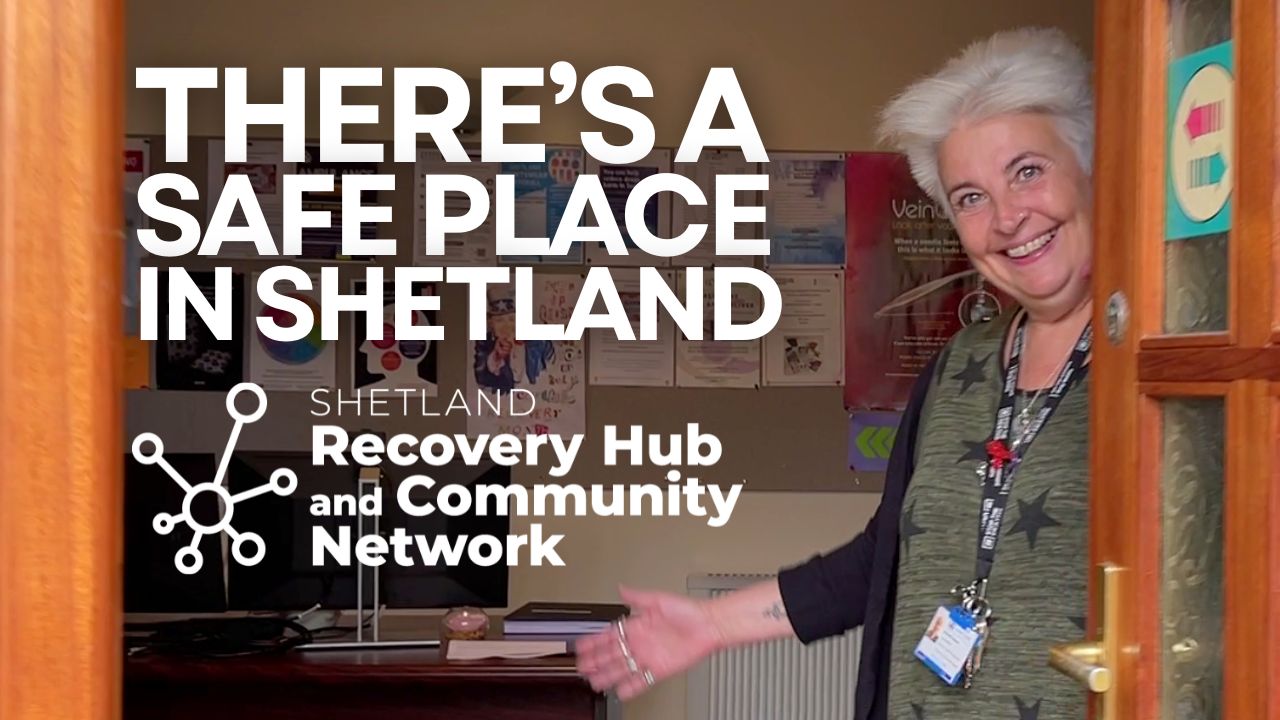
The Shetland Recovery Hub & Community Network offers a welcoming drop-in space and personalised one-to-one support for individuals facing challenges related to alcohol or other substance use. Support is also extended to families and loved ones.
Under one roof, the Hub connects people with a wide range of services, including health clinics, oral health care, financial guidance, and housing assistance. A range of wellbeing services are offered, along with guidance and referrals to additional support networks
Naloxone is accessible to individuals with lived or ongoing experience of substance use, their families, and anyone who may encounter someone experiencing an overdose. There is also access to sterile injecting equipment, drug testing and dry blood spot testing for blood-borne viruses.
Anyone trying to change their relationship with substances faces a multi-pronged challenge: often they won’t have their health or social needs met, and when they try to stay away from others who find themselves in a similar place, that can result in a harmful level of solitude.
“The community is unaccepting,” Amanda says. “When you start using substances it’s all a great fun, and as your use becomes more of an issue, your social sphere starts to shrink. Eventually all you’ve got left is other people who have the same lifestyle as you.
“Everybody needs a sense of belonging, and if you’ve got nobody and nothing, it’s not the drugs and alcohol that will take you back to using, it’s the isolation and loneliness.”
She points out how alcohol use is “socially acceptable, and almost a rite of passage for our young folk, yet we do not see people who use drugs as valuable and contributing members of our society”.
“On occasion we barely see them as human beings, with people and families that love them,” she told attendees at a recent community justice conference. “Alcohol use is okay, until it’s not. When alcohol becomes an issue for an individual, they move from the accepted group into the group who experience stigma.”
That stigma those working in the sector talk so frequently of manifests itself in multiple ways, often accompanied by destructively low levels of self-esteem: “How you feel about yourself is a barrier, your reputation within the community is a barrier, and the attitudes of professionals is a barrier.”
People with substance problems commonly have mental, social and physical health issues, as well as suffering from deprivation and often disabilities. But, in isolation from those problems, substance use – viewed by government primarily as a criminal justice rather than a health matter – is not classified as a “protected characteristic”.
Amanda describes being mindful about the use of language as “incredibly important”, with responsibility stretching far beyond recovery workers who have long recognised the need to banish the use of derogatory terms.
“It’s how we speak about it in our own lives, on social media, to our families. Changing the culture and attitude of our community is so fundamental to people getting their needs met, and becoming valued and contributing people in our society.”
The recovery hub itself, founded in 2020 and funded directly through the Scottish Government’s alcohol and drugs partnership programme, can only do so much. Amanda manages the service full time, with one part-time support worker and one part-time admin assistant.
This is the fifth overdose awareness day and fourth recovery month the hub has organised events for, and she is determined to firmly embed such activities in the calendar so they will, if need be, outlast her organisation.
“Recovery month, celebrating recovery, shouldn’t have one organisation pushing it forward. It should be NHS Shetland, it should be the SIC and the wider community – they should be going ‘right, we’ve got to do stuff this month to highlight the issues for everybody’.”
Finding ways to integrate those who do successfully recover into the world of work will always be challenging, Amanda says, praising the Community Bike Project and the SIC’s employability pathway for their achievements.
“If folk have got a reputation, their name has been in the paper [through appearing in court], the chances of getting paid employment are very difficult,” she acknowledges. “It’s really important to have empathy and understanding.
“It’s very easy for anyone to move from recreational use to somebody that has an issue with substances, it’s not too far a jump.
“It could happen to anybody: you, somebody you love, somebody really close to you. How would you like your loved one to be treated? Is what we’re doing good enough if this was my loved one? Speak out, shout out: this isn’t good enough, this person deserves better…”
Follow the Shetland Recovery Hub and Community Network on Facebook to find out more about events taking place for recovery month this year, and support available year round